Mastercard's New Trick: Turn Your Phone Into a Payment Terminal
Michael Johnson ·
Listen to this article~4 min
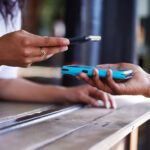
Mastercard's Merchant Accept lets small businesses accept payments using just their phone and bank account. No extra hardware needed. Here's how it works and why it matters.
For freelancers, vendors, and side hustlers, accepting electronic payments often means juggling multiple services or investing in payment terminals that may not make financial sense for a small operation. But what if you could accept payments with just your phone and existing bank account? That's the promise of Mastercard's new platform, Merchant Accept.
Mastercard is looking to simplify that process with Merchant Accept, a platform that allows merchants to accept payments using their existing devices and banking accounts. The solution could make it easier for smaller businesses to move beyond cash and add another layer of payment infrastructure.
### How Mastercard Accept Works
With Mastercard Accept, users log into their existing banking app and enter the transaction amount. Customers can then make contactless payments using a card or QR code. The platform will initially launch in Asia Pacific, Latin America, the Middle East, and Africa, with a broader global rollout expected to follow.
"Rather than build a standalone app or position it as a merchant account like what has been done in the U.S., Mastercard worked directly with major banks in the region to have them bundle the app in their mobile banking products," said Don Apgar, Director of Merchant Payments at Javelin Strategy & Research. "By enabling the user's phone to read debit card taps and having the funds flow directly through the banking app to the seller's account, Mastercard created an account-to-account payment product that doesn't require dedicated support or distribution."
### The Tap-to-Pay Trend
Mastercard Accept reflects a shift toward enabling small businesses to accept contactless payments through mobile devices. Several factors have contributed to this trend, including the rise of near-field communication (NFC) technology, now commonplace in consumer debit and credit cards. As a result, consumers increasingly expect the convenience of tap-to-pay at checkout.
Another development has been Apple's decision to open its previously proprietary NFC technology to third-party developers, expanding the possibilities for tap-to-phone solutions. These technologies allow merchants, including gig workers and freelancers, to accept payments directly on their smartphones without the need for an additional dongle or payment terminal. Apple has taken the concept further, even considering replacing conventional point-of-sale terminals in its own retail stores with iPhones as the primary payment acceptance device.
### Building Long-Term Relationships
While several solutions already support mobile-based payment acceptance, Mastercard's platform could extend these capabilities to small businesses across a wider range of markets and devices. This could be particularly relevant in areas where gig work and freelancing have become a central source of income, but access to payment infrastructure and reliable payouts remain an issue.
For financial institutions, these platforms also present an opportunity to reach underserved business segments and establish relationships with entrepreneurs earlier in their business journeys.
> "Accepting payments in the gig, creator, and thrift economies is not only a major growth area but has also been a pain point for both buyers and sellers," Apgar said. "Our research recommended that U.S. banks begin to bundle this tech with consumer banking accounts—not just business banking accounts—specifically to address what Mastercard built in the LAC and APAC regions. This is the future."
What does this mean for you? If you're a small business owner or freelancer, keep an eye out for similar solutions coming to your region. The ability to accept payments with just your phone could soon be as common as sending a text. And for banks, it's a chance to deepen relationships with customers by offering tools that make business easier.
Mastercard's move is a clear signal that the future of payments is mobile, seamless, and built into the apps we already use every day.